
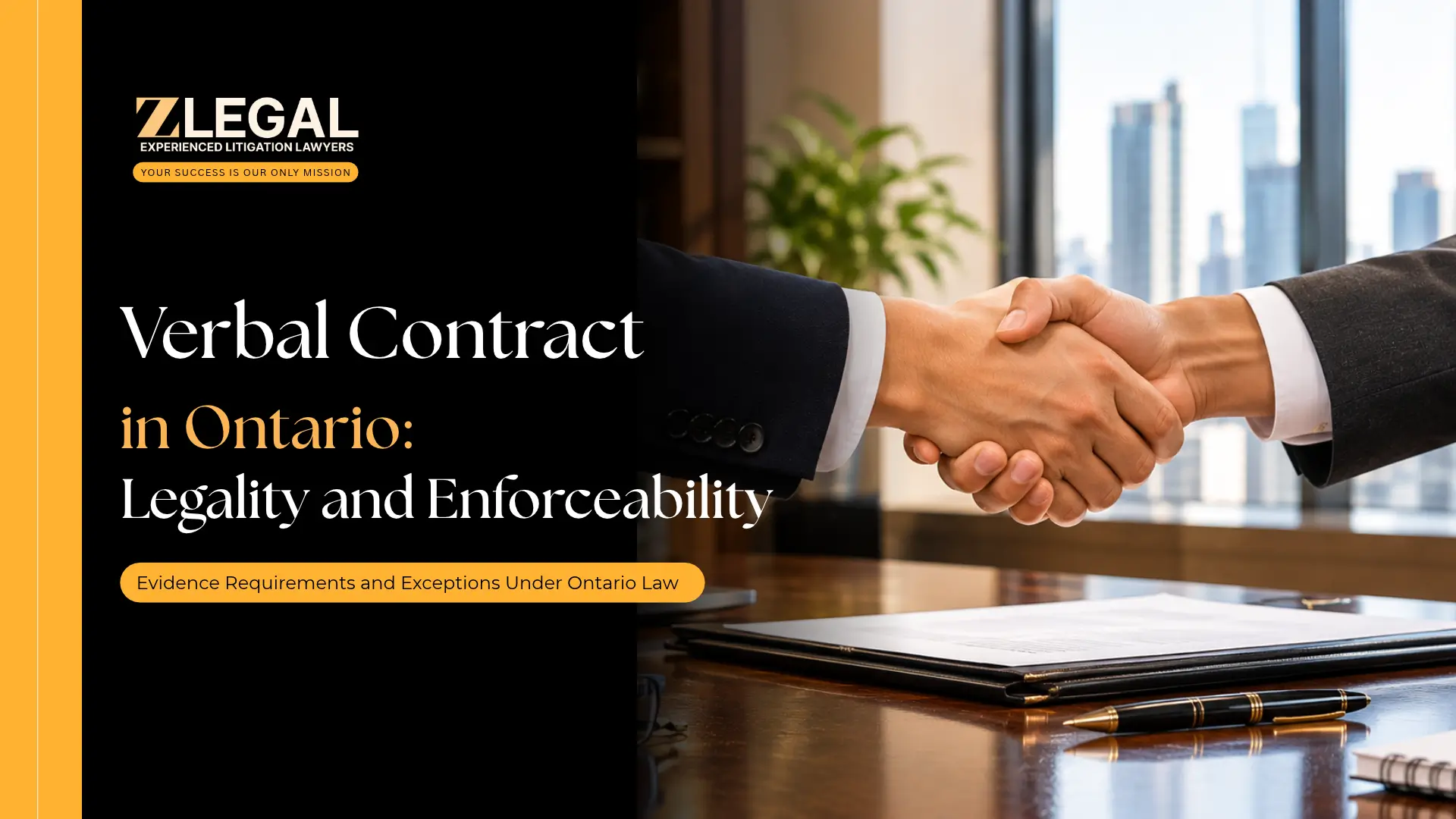
Many business owners and individuals assume that unwritten agreements carry no legal weight. However, a verbal contract in Ontario can remain every bit as legally binding as a formal written document. Specifically, the primary challenge of an oral agreement lies in establishing proof rather than verifying legal validity. When commercial deals or loans fail, determining exact terms requires careful evidence gathering and legal analysis. Partnering with a skilled Toronto commercial litigation lawyer ensures your legal team gathers appropriate documentation to enforce valid oral agreements effectively.
Essential Legal Elements of Verbal Contracts
Ontario law recognizes oral contracts provided five core contractual elements exist during formation. Specifically, a court enforces a verbal agreement when parties establish:
-
An explicit offer followed by an unequivocal acceptance of terms.
-
Mutual consideration, meaning each party provides monetary or structural value.
-
Genuine intent to create binding legal relations rather than casual social arrangements.
-
Sufficiently certain essential terms, including pricing, timing, and specific deliverables.
-
Legal capacity of all participating parties to enter valid agreements.
However, leaving critical pricing or delivery terms for future discussion makes agreements unenforceable. If you face preliminary litigation questions, our comprehensive guide on Ontario civil lawsuit deadlines outlines strict procedural timeline rules.
Statutory Exceptions Requiring Written Agreements
While oral contracts remain enforceable generally, specific provincial statutes mandate written agreements for select transactions. Specifically, section 4 of the Statute of Frauds requires written contracts for:
-
Land sales, property transfers, or created interests in real estate.
-
Guarantees agreeing to pay third-party debts upon default.
Furthermore, leases lasting three years or less remain valid exceptions under property legislation. In addition, consumer agreements must satisfy statutory writing requirements under consumer protection laws. If property service issues arise, our guide on how to serve a defendant in Ontario Small Claims Court explains necessary procedural delivery steps. You can also explore Z Legal to learn more about our civil litigation services. For official court guidelines, consult the Ontario Courts Administration portal.
Proving an Unwritten Agreement in Ontario Courts
Litigants proving a verbal contract in Ontario must satisfy the balance of probabilities standard. Consequently, judges evaluate contemporary electronic records, financial transactions, and subsequent party conduct to confirm intentions.
Useful supporting evidence includes emails, text messages, bank e-transfers, detailed invoices, and neutral witness statements. Furthermore, if complete contract terms cannot be proven, courts may award compensation through quantum meruit to prevent unjust enrichment. Ultimately, pursuing claims promptly within the two-year statutory limitation period preserves your enforcement rights.
Frequently Asked Questions
Is a verbal contract in Ontario legally binding?
Yes. Indeed, oral agreements are legally binding if offer, acceptance, consideration, intent, and certain terms exist.
Can text messages serve as written contract evidence?
Yes. Specifically, electronic records satisfy legal writing requirements under the Electronic Commerce Act, 2000.
What contracts must be in writing in Ontario?
Contracts involving land sales, property interests, and debt guarantees must be written under the Statute of Frauds.
How long do I have to sue for breach of an oral contract?
Under the Limitations Act, 2002, you generally have two years from discovery to issue legal claims.
What is quantum meruit in contract disputes?
Quantum meruit allows courts to award fair compensation for delivered services when specific contract terms remain uncertain.
Can Small Claims Court enforce an oral agreement?
Yes. Small Claims Court handles oral contract disputes for claims valued up to $50,000.
This article is general information, not legal advice. For advice on your specific matter, please contact Z Legal.